A Bridge Year
A Bridge Year for Five-Year-Olds: Extending Early Childhood in Nature and Community
When Families Begin to Consider a Bridge Year
For some families, the transition to kindergarten arrives before a child feels ready to leave the rhythms of early childhood. A child may still be deeply engaged in imaginative play, developing social confidence, or finding their footing within group learning.
A bridge year can offer space for that development to continue.
At Takoma Park Cooperative Nursery School, families occasionally join our community after time in other early childhood programs, seeking one more year rooted in the values of early learning: play, relationship, exploration, and time spent outdoors.
For these children, the bridge year is not simply a pause before kindergarten. It is an opportunity to experience a different model of early childhood education — one grounded in nature, cooperative learning, and community connection.
A Different Kind of Learning Environment
Many families discovering our program are encountering an outdoor school model for the first time.
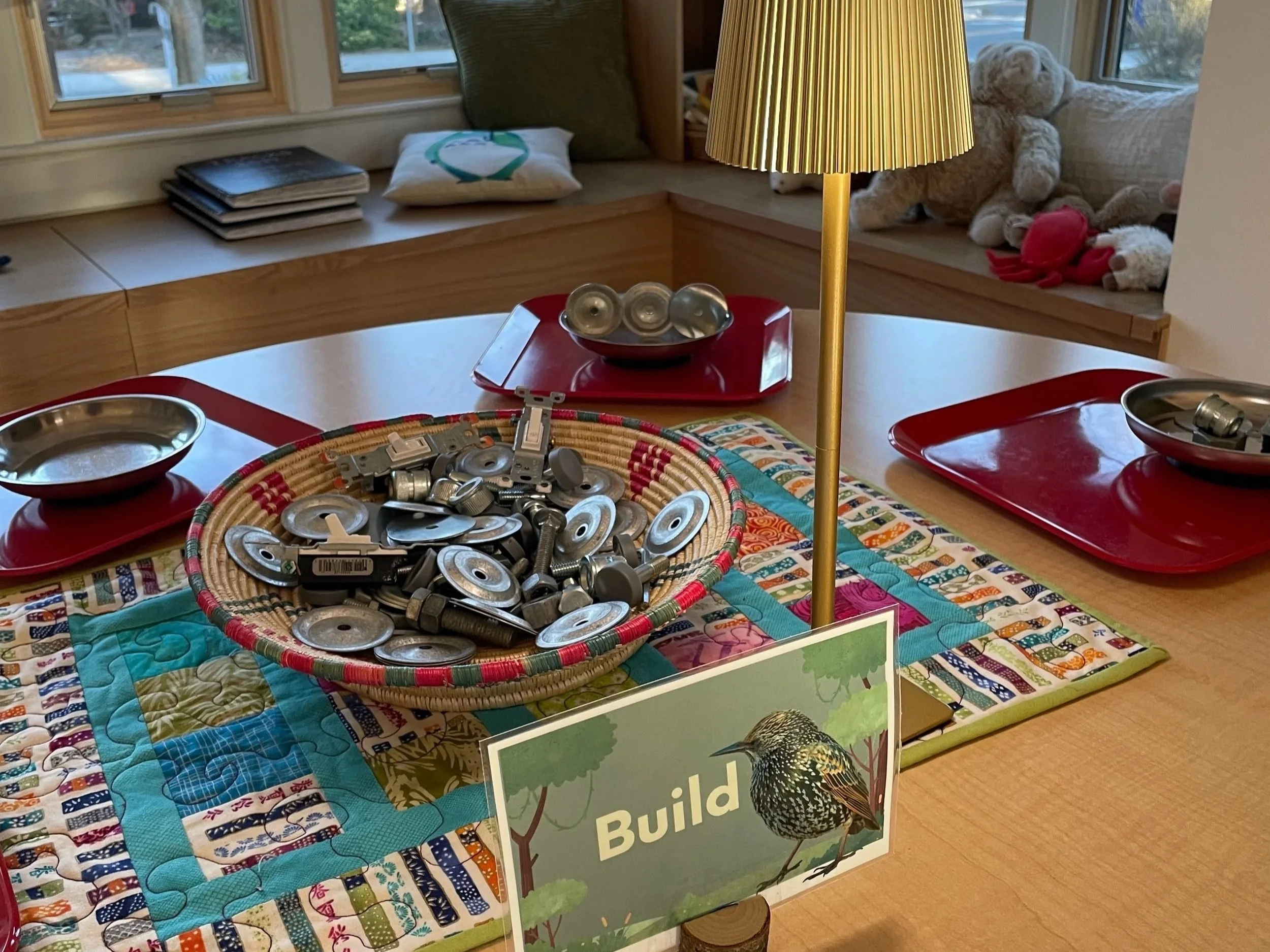
Children spend their days moving between our outdoor classroom, neighborhood green spaces, and indoor environments designed to mirror the rhythms and materials of the natural world. Learning begins outdoors and flows inward, allowing children to explore, build, observe, and collaborate in ways that support both curiosity and resilience.
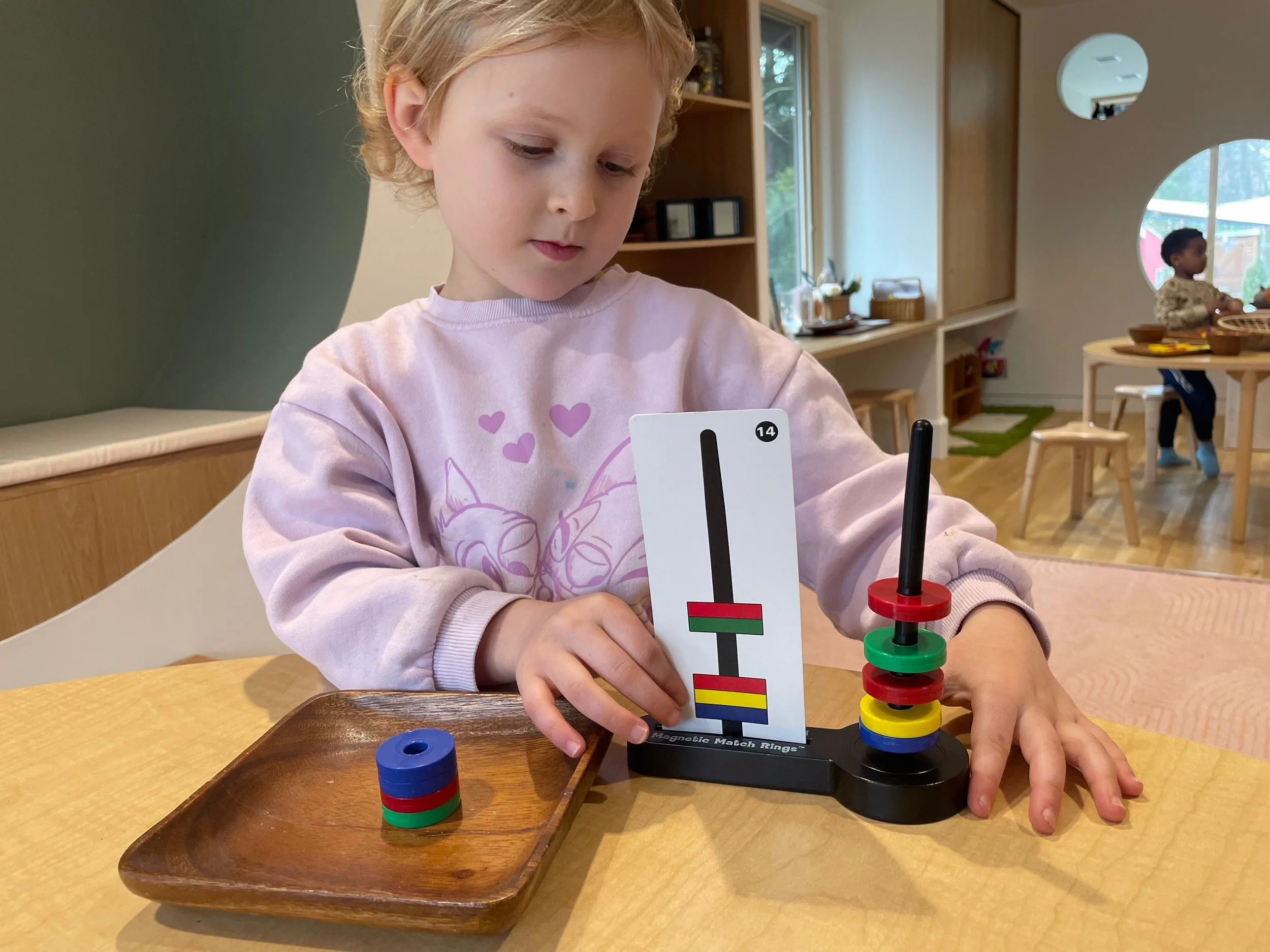
For five-year-olds, this environment often opens new possibilities. Children who have experienced more structured settings may rediscover the depth of imaginative play, strengthen friendships through cooperative exploration, and develop confidence in their own ideas.
Why Families Choose a Bridge Year in a Nature-Based School
Families who join our community for a bridge year often share a common hope: that their child can spend one more year in an environment where childhood is not hurried.
In a nature-based early childhood program, children have space to:
develop independence through real responsibility and shared work
build complex friendships through collaborative play
strengthen attention and problem-solving through open-ended exploration
experience seasonal rhythms through daily outdoor learning
grow confidence in their voice within a small, supportive community
These experiences support the foundations that matter most for school readiness: curiosity, persistence, empathy, and the ability to work with others.
The Cooperative Difference
Another aspect that distinguishes our program is its cooperative structure.
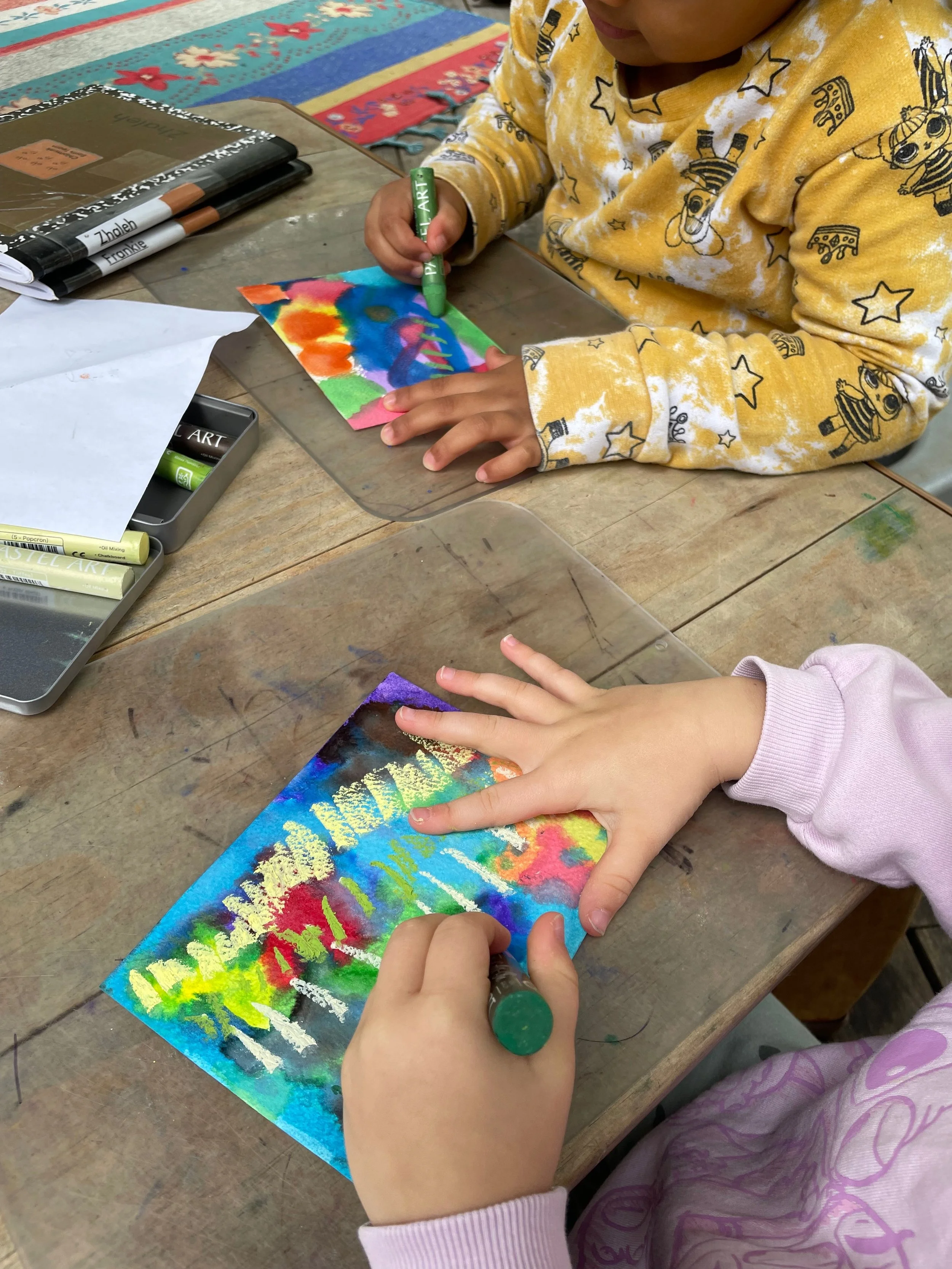
Parents participate in the life of the classroom, working alongside teachers and children throughout the year. This model of cooperative parent education creates a learning community where adults grow alongside children, developing deeper understanding of early childhood development and the ways young children learn through play.
For families arriving from other schools, this experience often becomes one of the most meaningful aspects of the year. Parents witness learning firsthand while building relationships with other families who share a commitment to collective care and community life.
Children, in turn, see adults collaborating, supporting one another, and working together to sustain a shared environment.
Community at the Center
Takoma Park Cooperative Nursery School is rooted in the Long Branch neighborhood and shaped by the families who participate in the life of the school. Children move through the neighborhood’s green spaces, observe seasonal changes, and develop a sense of belonging within the places they inhabit each day.
This connection between school, community, and landscape is central to our approach. Children come to understand themselves not only as learners but as participants in a living environment and a caring community.
Considering a Bridge Year
Not every child needs a bridge year, and for many families kindergarten is a joyful and appropriate next step. But for children who would benefit from one more year rooted in play, nature, and community, this path can provide a meaningful continuation of early childhood.
Families exploring this possibility often find that the experience becomes more than an additional year of preschool. It becomes an introduction to a different way of understanding education — one grounded in relationship, curiosity, and the shared work of learning together.
Families who are considering a bridge year are encouraged to learn more about our program, curriculum, and community.