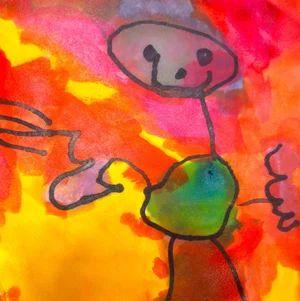
It Started With A Stick
Connections and Learning Through an Outdoor Lens
Not long ago, during a morning of outdoor play, a child picked up a long forked stick. One of those perfect Y-shaped ones that seem full of possibility. Within seconds another child called out, “Hey! I was going to use that stick!” The first child ran. The second child chased. Soon six children were running in circles, sticks waving, voices rising, and oh my! tears forming. From the outside it looked like chaos. But when we pause and observe carefully, moments like these reveal something else entirely. Action as communication. We see a pattern of signal and response beneath all of the running, shouting, the “give me that back” shouts. The stick wasn’t the problem. It was simply a starting point of a story unfolding between children, materials, and environment.
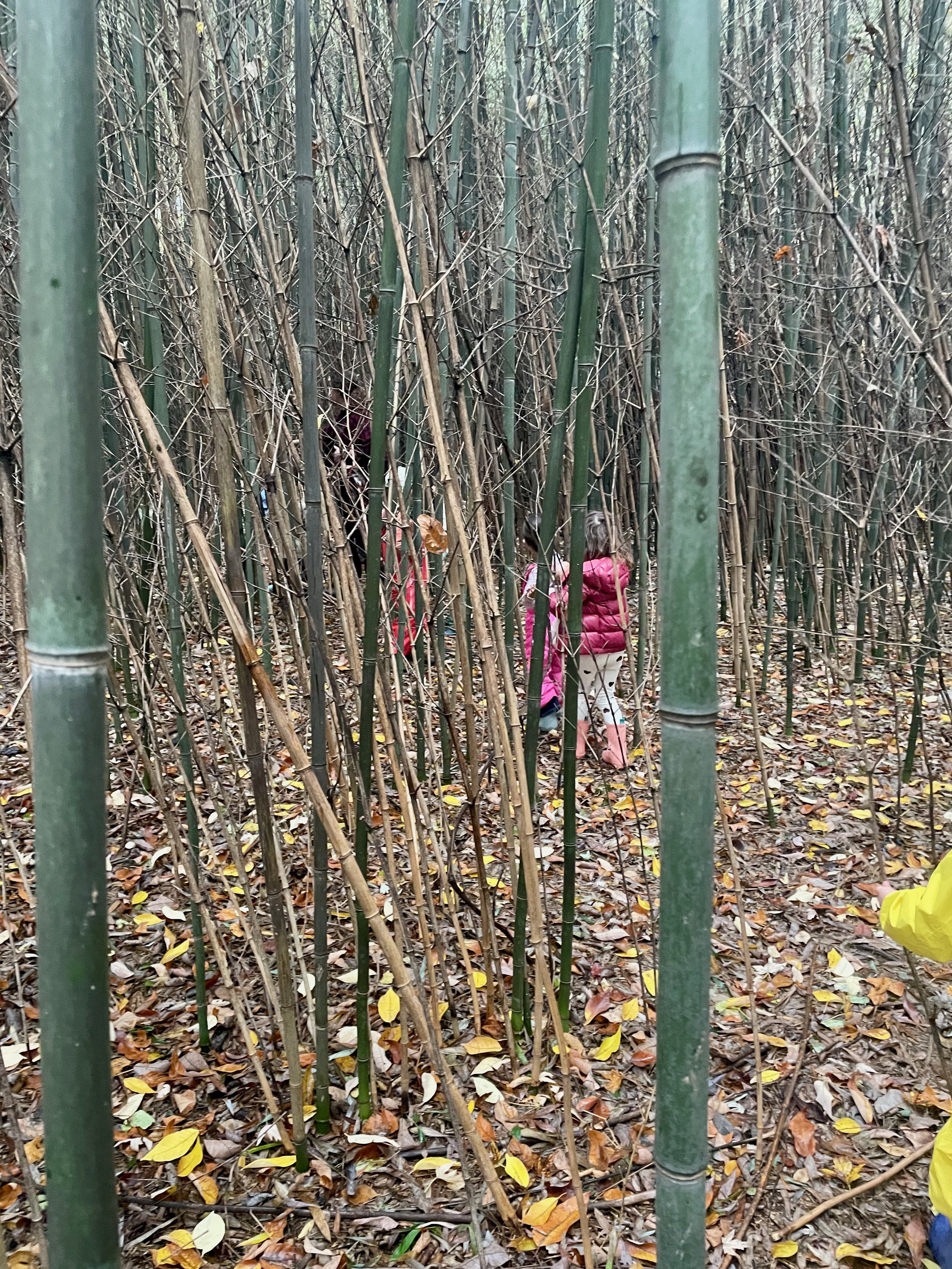
The children explore one of their favorite places. They call it “Tiger Town” and it’s a small grove of densely packed bamboo.
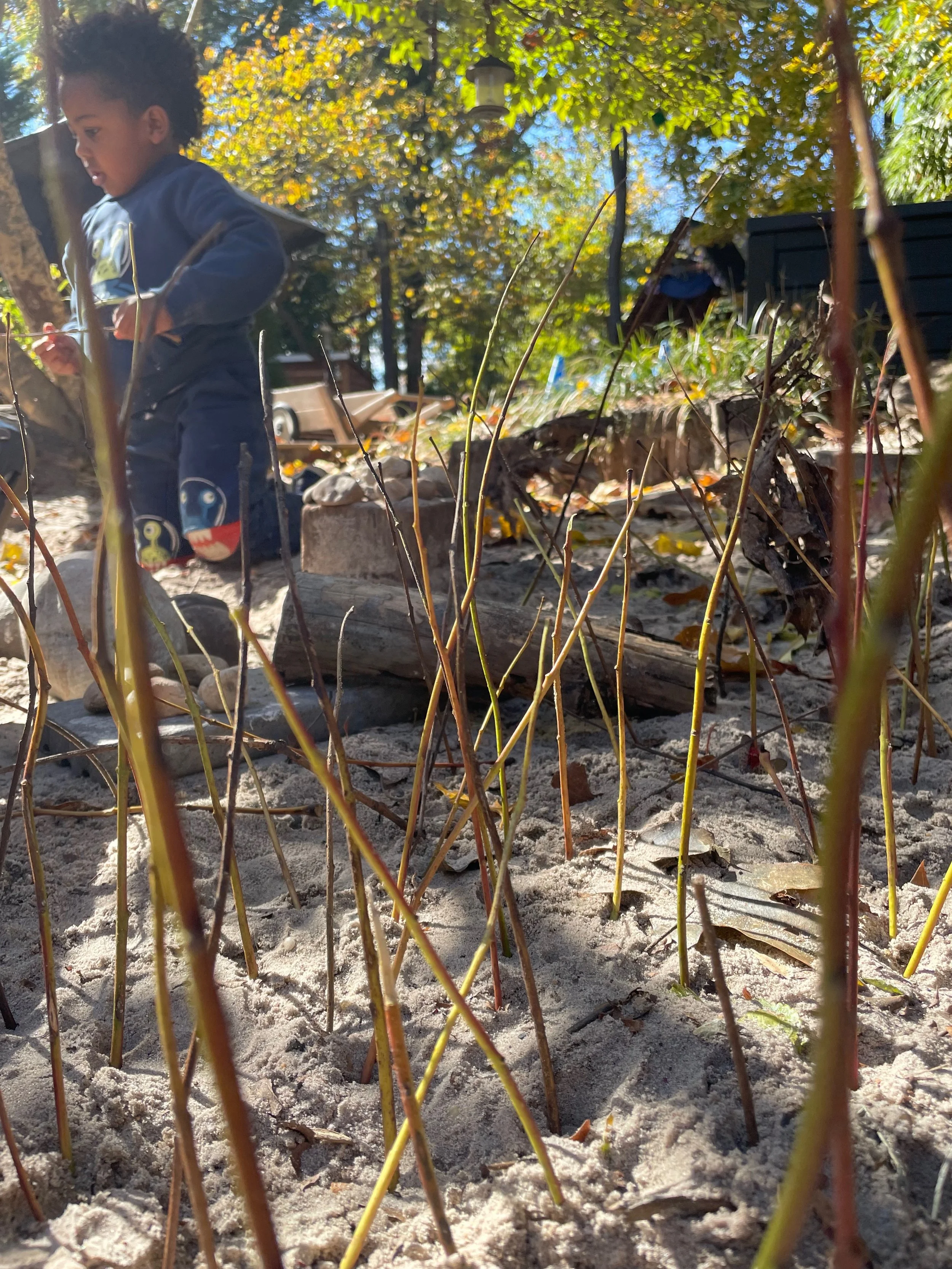
Back at their outdoor classroom the children use stems to recreate the “Tiger Town” bamboo forest in the sandpit.
In outdoor spaces, that story often becomes bigger and more visible. Without walls, behavior expands across the landscape with running, gathering, chasing, building, hiding. A gust of wind, a sudden bird call, or the discovery of an irresistible stick can act as the antecedent that shapes what happens next. When we look closely, we see children navigating belonging, fairness, excitement, and uncertainty all at once. Slowing down and applying a more open lens, a view to how we connect with each other, helps adults shift from reacting to reflecting. Instead of asking “How do we stop this?” we begin asking different questions: What happened right before? What is the child trying to tell us? What response might help them return to the play rather than leave it?
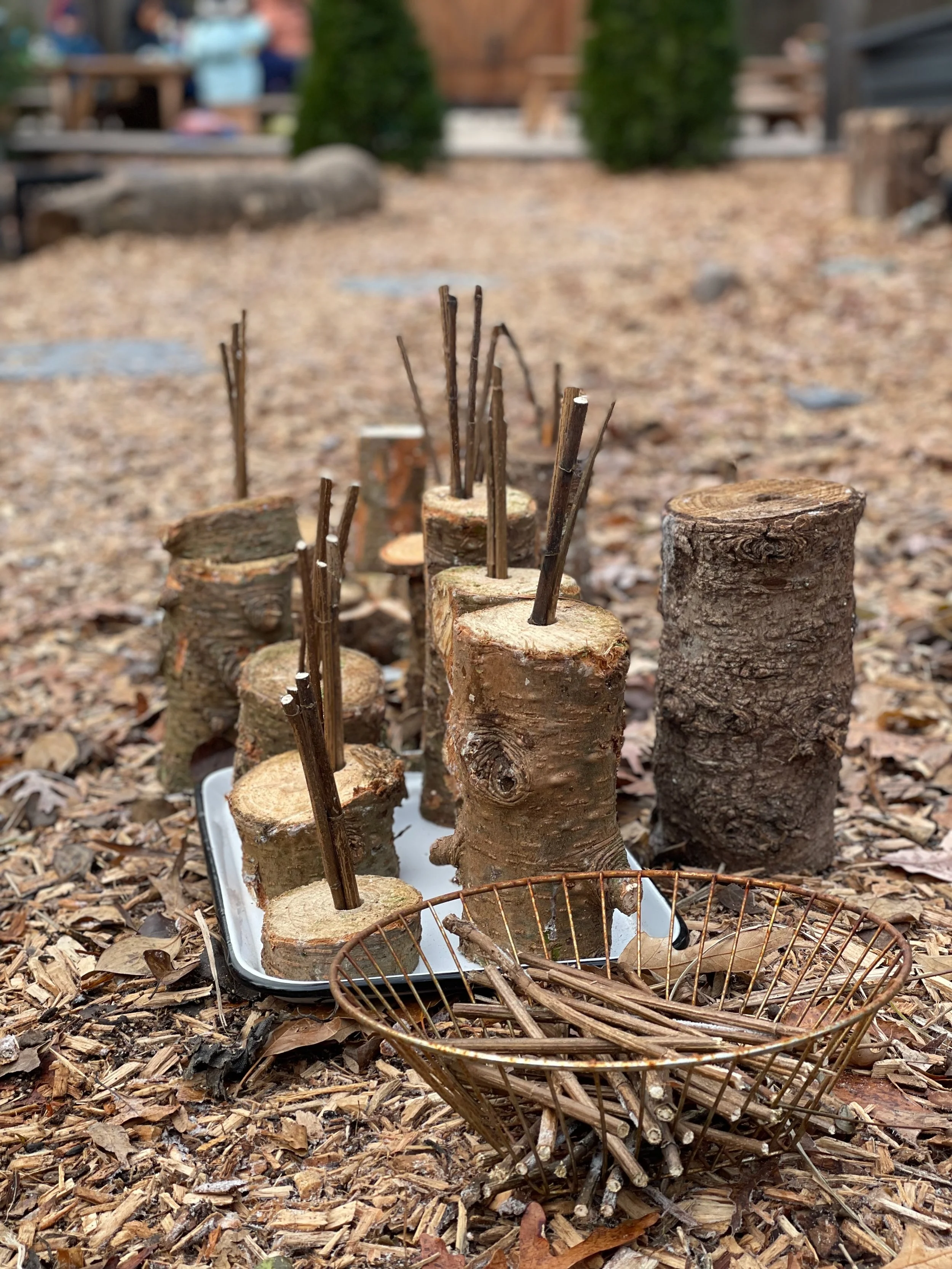
Creative use of pine tree and twigs; Birthday cakes, so many birthday cakes!
A few days after the stick run around, the same child sat on a log with a peer, each holding a stick. Together they were making pretend marshmallows out of leaves. When a teacher asked what helped them play together this time, the child shrugged and said, “The stick didn’t feel like mine anymore. It’s for roasting marshmallows.”
That quiet shift holds a powerful reminder for educators. When children are given the grace of time, language, and supportive responses instead of quick corrections, they begin to understand their own actions and the reactions of others. In outdoor classrooms especially, behavior becomes not something to control, but something to observe, interpret, and guide.
One stick, one conversation, and one moment of reflection at a time.